Examining Odds Fluctuations Triggered by Squad Rotations and Jockey Changes
Written by Zoe Hartmann · Sep 21, 2026

Examining Odds Fluctuations Triggered by Squad Rotations and Jockey Changes
Analysts track how announcements about squad rotations in football and jockey substitutions in horse racing trigger rapid adjustments across multiple betting markets, and these shifts often create windows for strategic placements in match winner, total goals, and place markets simultaneously. Data from major platforms indicates that rotation news released 48 hours before kickoff tends to move opening lines by 0.25 to 0.5 points in European football leagues, while jockey changes announced on race morning can shift morning odds by 15 to 30 percent in UK and Irish flat races.
Patterns in Football Squad Rotation Signals
Researchers at academic institutions have documented that managers who rotate more than three starters in a midweek fixture produce measurable effects on both Asian handicap and over-under lines, and these movements accelerate when the rotated players include key attackers or central defenders. Observers note that betting exchanges register volume spikes within 30 minutes of official team sheets, with liquidity concentrating first in the player props market before flowing into the main match markets. In September 2026, several European leagues schedule congested fixtures that increase rotation likelihood, and analysts expect similar volume patterns to repeat based on historical datasets from comparable calendar periods.
Jockey Switches and Their Immediate Effects
Studies of thoroughbred racing records show that a last-minute jockey change from a top-five rider to a lesser-known apprentice often widens the spread in win markets by several points, while the reverse substitution compresses those spreads and attracts heavier support in the place and show pools. Those who monitor tote boards report that such adjustments frequently coincide with cross-market arbitrage opportunities between fixed-odds bookmakers and pari-mutuel systems, especially when the change occurs after final declarations close. Evidence from Australian racing authorities highlights that jockey alterations announced after 8 a.m. on race day correlate with accelerated line movement in quinella and exacta markets as well.
Strategic Placement Across Multiple Markets
Traders examine correlations between squad news in one sport and parallel movements in unrelated racing events that share overlapping bettor pools, and this cross-sport linkage becomes pronounced during major festival weekends. One documented approach involves monitoring the speed of line adjustment rather than the absolute shift itself, because slower movements sometimes signal that the market has not fully incorporated the information. Data compiled by international gaming research groups reveals that bettors who place initial stakes in lower-liquidity derivative markets such as corner counts or first-goal timing often secure better entry points before the primary lines catch up.
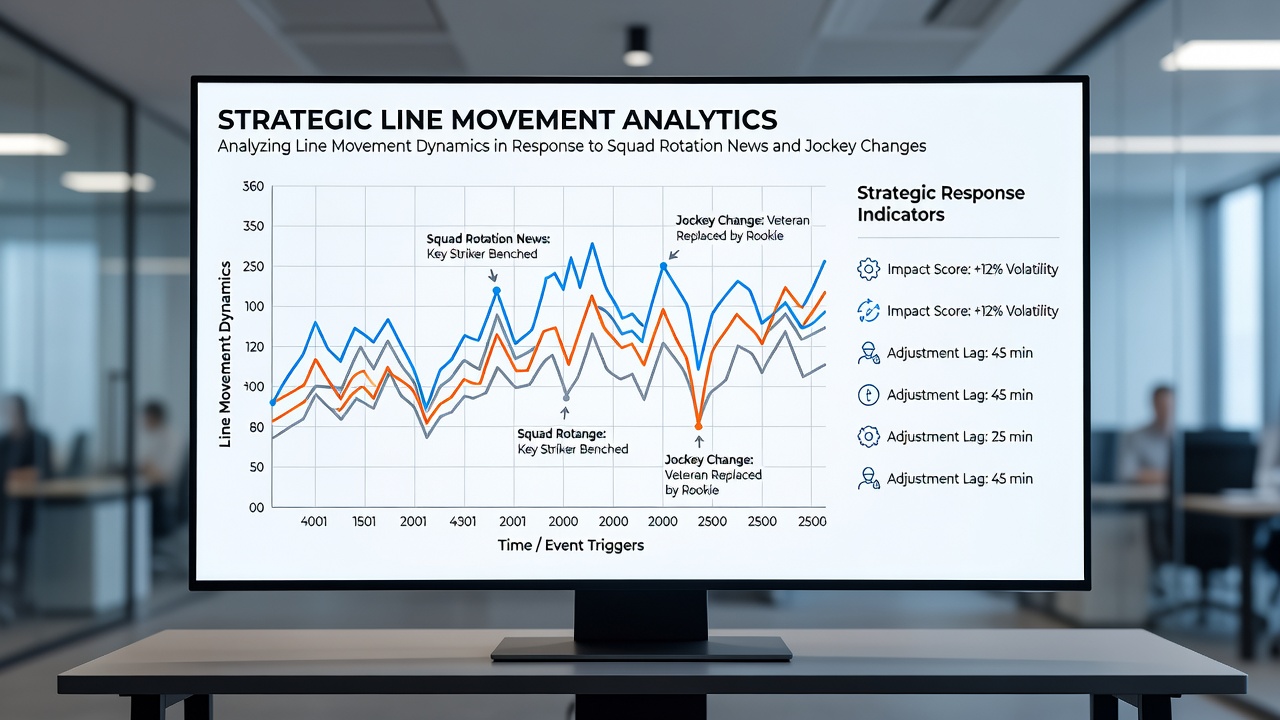
Coordinated placement strategies frequently target the same underlying event through different instruments, for instance combining a football accumulator leg with a related horse racing each-way bet when both are influenced by the same news cycle. Figures from North American sportsbooks indicate that such multi-market positioning reduces variance when the initial line reaction proves overstated, and software tracking tools now flag these correlated movements in real time for professional syndicates.
Timing and Information Flow
News of squad rotations travels through official club channels, social media, and betting forums at different speeds, and the earliest movers typically secure positions before retail platforms adjust their offerings. Jockey changes follow a more regulated path because stewards require formal notification, which creates a predictable sequence of line updates across bookmakers. Those monitoring multiple regions observe that European football news tends to influence Asian markets within minutes, whereas Australian racing adjustments propagate more slowly to European operators due to time zone differences.
Conclusion
Market participants continue to refine models that quantify the magnitude and duration of line movements following personnel announcements, and ongoing data collection from diverse regulatory jurisdictions supports improved calibration of these models. The interaction between squad rotation disclosures, jockey substitutions, and resulting odds dynamics remains a focal point for analysts seeking measurable edges across interconnected betting markets.